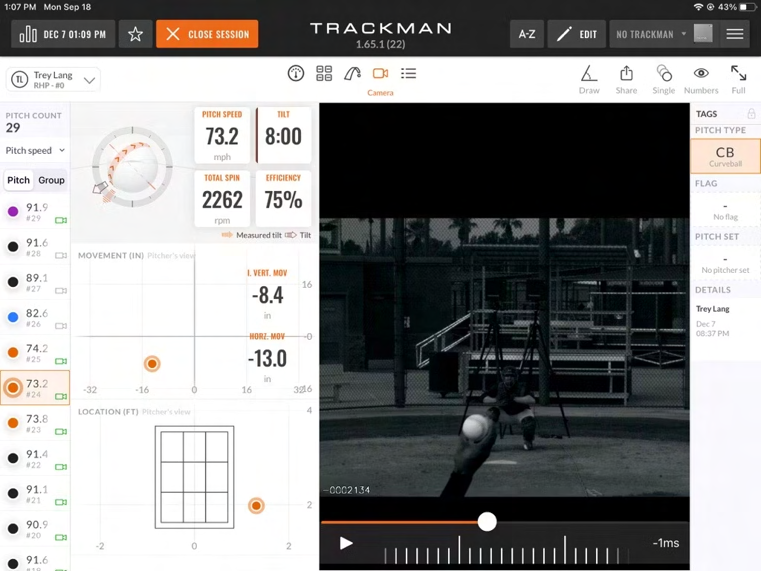
Edgertronic Camera & B1 Integration v2.0
Rebuilt the high-speed camera integration with Sanstreak, the makers of Edgertronic, taking synchronised video capture from unreliable to close to 100% and bringing the feature back into regular use.
Context
The first version of the Edgertronic integration captured video inconsistently. High-speed cameras only hold a short buffer, so if the trigger arrives late, or the wrong frames are kept, the pitch is gone. Customers had largely stopped relying on the feature, which left a premium hardware pairing unused.
Approach
Started from the feedback. I gathered and prioritised the enhancement requests coming back from customers, and used them to define what “working” had to mean in a session.
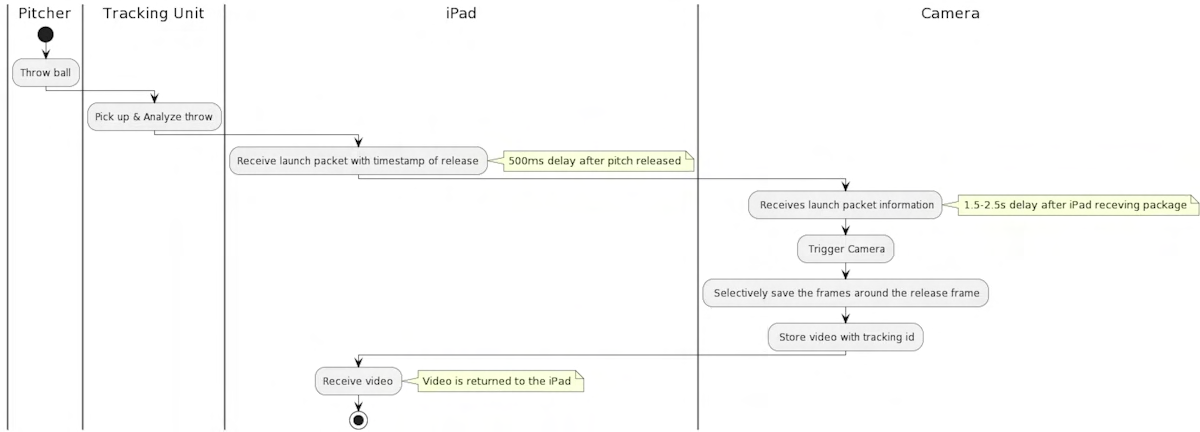
Made the timing explicit. I mapped the full path from the pitcher’s release through the tracking unit, the iPad and the camera, with the real latency at each hop: a launch packet reaching the iPad within roughly 500ms, the camera receiving it 1.5 to 2.5 seconds later. That model showed the fix was in frame selection around the release frame, not in raw trigger speed.
Ran it as a joint build. I worked directly with Sanstreak, the creator of Edgertronic, to develop compatible camera software rather than working around their firmware from the outside.
Outcome
- Close to a 100% video capture rate, up from an unreliable baseline.
- Integration usage increased as customers returned to the feature.
- A shared timing model the support team could use to diagnose setups in the field.
Artifacts